How Much Does Pet Insurance Cost by State? A 12-State Breakdown
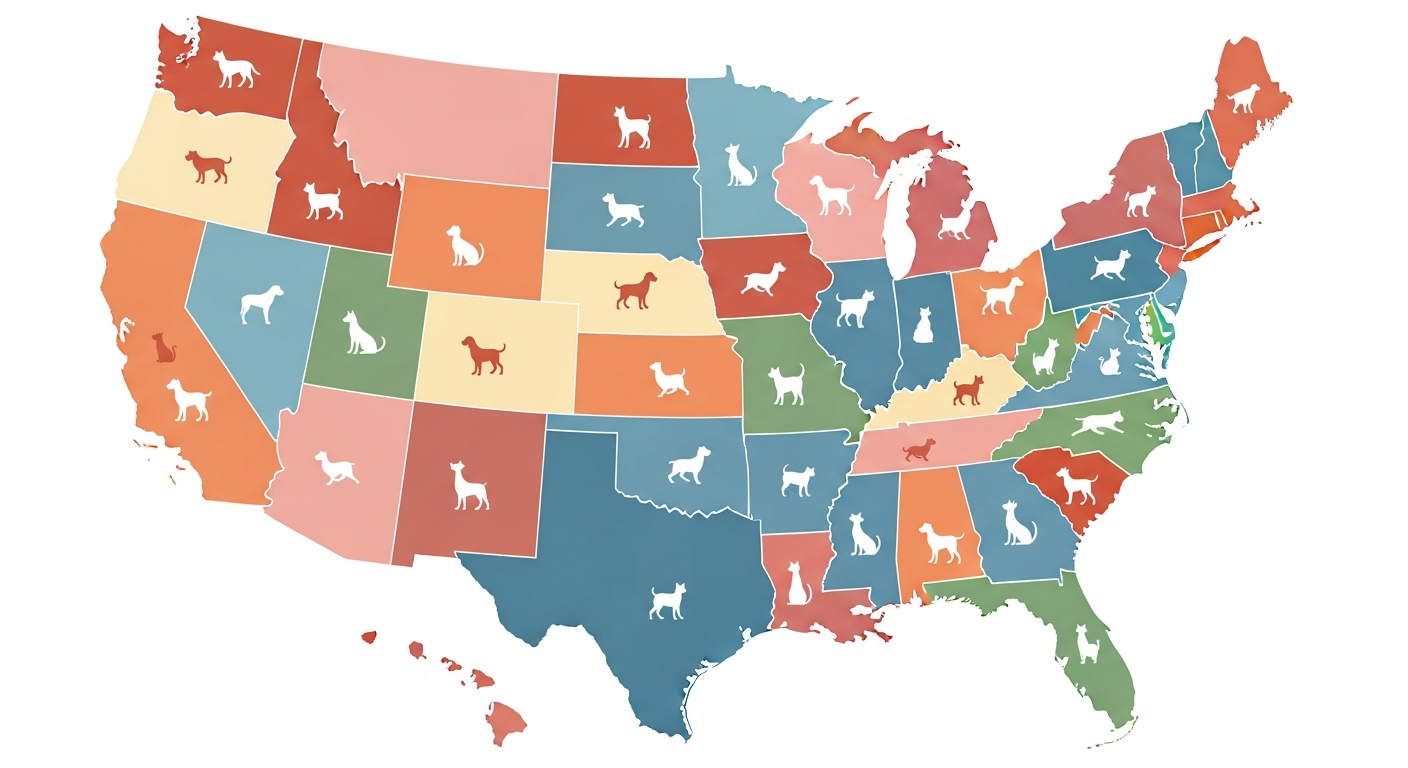
If you've shopped pet insurance quotes in two different ZIP codes, you've already seen the punchline: where you live can swing your monthly premium by 30% or more. A Labrador in suburban Pittsburgh and the same Labrador in downtown Brooklyn don't pay the same rate, even with identical coverage. State-level vet wage costs, urban density, claim frequency, and the regulatory environment all push premiums up or down. Below is a research-based snapshot of what dog and cat owners can typically expect to pay across 12 of the most populated states heading into 2026.
Ranges below reflect typical monthly accident+illness premiums for an adult mixed-breed dog or cat in major metros within each state. Your quote will vary by breed, age, deductible, reimbursement %, and ZIP.
National baseline: typical pet insurance costs in 2026
According to NAPHIA's most recent State of the Industry data, the national average for an accident-and-illness policy on a dog runs about $62 per month, while cat policies average around $32 per month. Industry trackers including Forbes Advisor, ValuePenguin, MarketWatch, Pawlicy Advisor, and NerdWallet have all reported similar 2024-2025 figures, with year-over-year premium inflation running roughly 5-10% as veterinary costs climb. Adjusting for that trend, a reasonable 2026 baseline is roughly $50-$80 per month for dogs and $25-$45 for cats nationally.
Those are averages, not quotes. A 2-year-old mixed-breed mutt in a low-cost-of-living state could land near $30 a month, while a 7-year-old French Bulldog in Manhattan could push past $150. Breed alone can double a premium because insurers price the genetic risk of conditions like hip dysplasia, brachycephalic airway syndrome, and certain cancers. Age is the second biggest lever, followed by your chosen deductible (typically $100-$1,000) and reimbursement rate (usually 70%, 80%, or 90%).
With those caveats in mind, here's how the 12 states stack up.
State-by-state breakdown
California (CA)
Typical monthly premium for a dog: $65-$95. Cats run roughly $32-$48. California's higher vet wage costs in Los Angeles, San Francisco, and San Diego push premiums above the national average, and specialist visits in coastal metros routinely run two to three times what they cost in the Central Valley. Owners in inland ZIP codes like Fresno or Bakersfield often see noticeably lower rates than their Bay Area counterparts.
New York (NY)
Typical monthly premium for a dog: $70-$105. Cats run roughly $34-$52. New York City's veterinary costs are among the highest in the country, particularly in Manhattan and Brooklyn, where 24-hour emergency hospitals and board-certified specialists drive both treatment costs and claim severity up. Upstate ZIPs around Albany, Rochester, or Buffalo typically come in 15-20% lower.
Florida (FL)
Typical monthly premium for a dog: $55-$82. Cats run roughly $28-$42. Florida sits close to the national average, but Miami-Dade and Broward push higher than Tampa or Jacksonville. The state's heat and humidity drive higher claim frequency for skin conditions, ear infections, and heartworm-related care, which insurers price into the actuarial tables.
Texas (TX)
Typical monthly premium for a dog: $48-$72. Cats run roughly $25-$38. Texas tends to run slightly below the national average thanks to lower vet wage costs in much of the state, though Austin, Dallas, and Houston metro ZIPs trend higher. Suburban DFW and the Rio Grande Valley generally produce some of the most affordable quotes in the country for healthy adult pets.
New Jersey (NJ)
Typical monthly premium for a dog: $68-$98. Cats run roughly $33-$50. New Jersey premiums track closely with the New York metro because most of the state shares a vet labor market with NYC. Bergen, Hudson, and Essex counties produce the highest quotes; rural southern Jersey ZIPs tend to come in noticeably cheaper.
Massachusetts (MA)
Typical monthly premium for a dog: $65-$92. Cats run roughly $32-$47. Greater Boston is one of the more expensive vet markets in the Northeast, with concentrations of specialty hospitals and teaching institutions that drive higher average claim costs. Central and western Massachusetts ZIPs tend to price 10-15% lower than the Boston-Cambridge core.
Washington (WA)
Typical monthly premium for a dog: $58-$85. Cats run roughly $30-$44. Seattle and the surrounding King County ZIPs push Washington's averages up, while Spokane and the eastern side of the state come in closer to the national midpoint. Washington also has a high pet ownership rate, which insurers note correlates with slightly higher overall claim volume.
Colorado (CO)
Typical monthly premium for a dog: $55-$80. Cats run roughly $28-$42. Denver and Boulder run slightly above the state average; mountain and Western Slope ZIPs are usually cheaper. Colorado's active outdoor culture means a higher rate of orthopedic claims (torn cruciate ligaments, tick-borne illness exposure), which insurers factor into adult dog pricing.
Pennsylvania (PA)
Typical monthly premium for a dog: $52-$76. Cats run roughly $26-$40. Pennsylvania splits sharply by region: Philadelphia and its collar counties price near the New Jersey range, while Pittsburgh, Harrisburg, and the rural center of the state come in well below the national average. PA is one of the better states for budget-conscious owners outside the Philly metro.
Illinois (IL)
Typical monthly premium for a dog: $58-$84. Cats run roughly $29-$44. Chicagoland drives Illinois averages above the national midpoint, with Cook, DuPage, and Lake counties pricing notably higher than central or southern Illinois. Downstate ZIPs like Peoria, Springfield, and Champaign typically yield quotes 15-20% cheaper than the Chicago metro.
Virginia (VA)
Typical monthly premium for a dog: $54-$78. Cats run roughly $27-$41. Northern Virginia (Fairfax, Arlington, Loudoun) prices similarly to the D.C. metro and pulls Virginia's averages up; Richmond, Hampton Roads, and the Shenandoah Valley track closer to the national average. Virginia's mild premium environment makes it one of the more reasonable states for adult-dog coverage.
Maryland (MD)
Typical monthly premium for a dog: $60-$88. Cats run roughly $30-$45. Maryland premiums follow the broader D.C.-Baltimore corridor, with Montgomery and Howard counties at the top end and Eastern Shore ZIPs pricing meaningfully lower. Specialty referral hospitals concentrated around Baltimore drive higher average claim severity.
What drives the state-by-state difference?
Five factors do most of the work. First, veterinary wage costs: a vet tech in San Francisco earns roughly twice what one earns in rural Texas, and that flows directly into treatment invoices. Second, urban density and the concentration of 24-hour emergency and specialty hospitals, which raise the ceiling on claim severity. Third, claim frequency, which is influenced by climate (heartworm and tick exposure), breed mix, and pet density. Fourth, regulatory environment: a handful of states require specific disclosures or rate filings that affect how insurers price. Fifth, the underlying breed mix in the state's pet population, since insurers blend regional risk profiles into base rates.
Tips for finding the lowest premium in your state
- Enroll while your pet is young and healthy. Premiums climb noticeably after age 5, and pre-existing conditions are excluded once they appear.
- Raise the deductible. Moving from a $250 to a $500 or $750 annual deductible can cut your monthly premium by 15-25%.
- Lower the reimbursement rate. Choosing 70% or 80% reimbursement instead of 90% saves money up front and still covers the bulk of catastrophic claims.
- Compare at least three quotes. State-level rate differences between insurers can run 30-40% on the exact same coverage profile.
- Ask about multi-pet, annual-pay, and employer-group discounts, which typically shave 5-10% off the sticker price.
- Skip wellness add-ons if you're cost-focused. Routine-care riders rarely pay back more than they cost.
- Re-shop at renewal. Carriers re-rate annually, and the cheapest carrier in your ZIP this year may not be cheapest next year.
Bottom line: there's no single answer to "how much does pet insurance cost" because the right number depends on your state, your ZIP, your pet's breed and age, and the deductible and reimbursement levels you choose. The fastest way to find your real number is to pull a few quotes side by side.

Your Pet, Your Companion, Your Pocket
Our dedication lies in connecting you with equitable and accurate pricing, tailored to your pet’s breed, age, and location. If you’re seeking further recommendations, feel free to contact us via our social media channels or by email at [email protected].